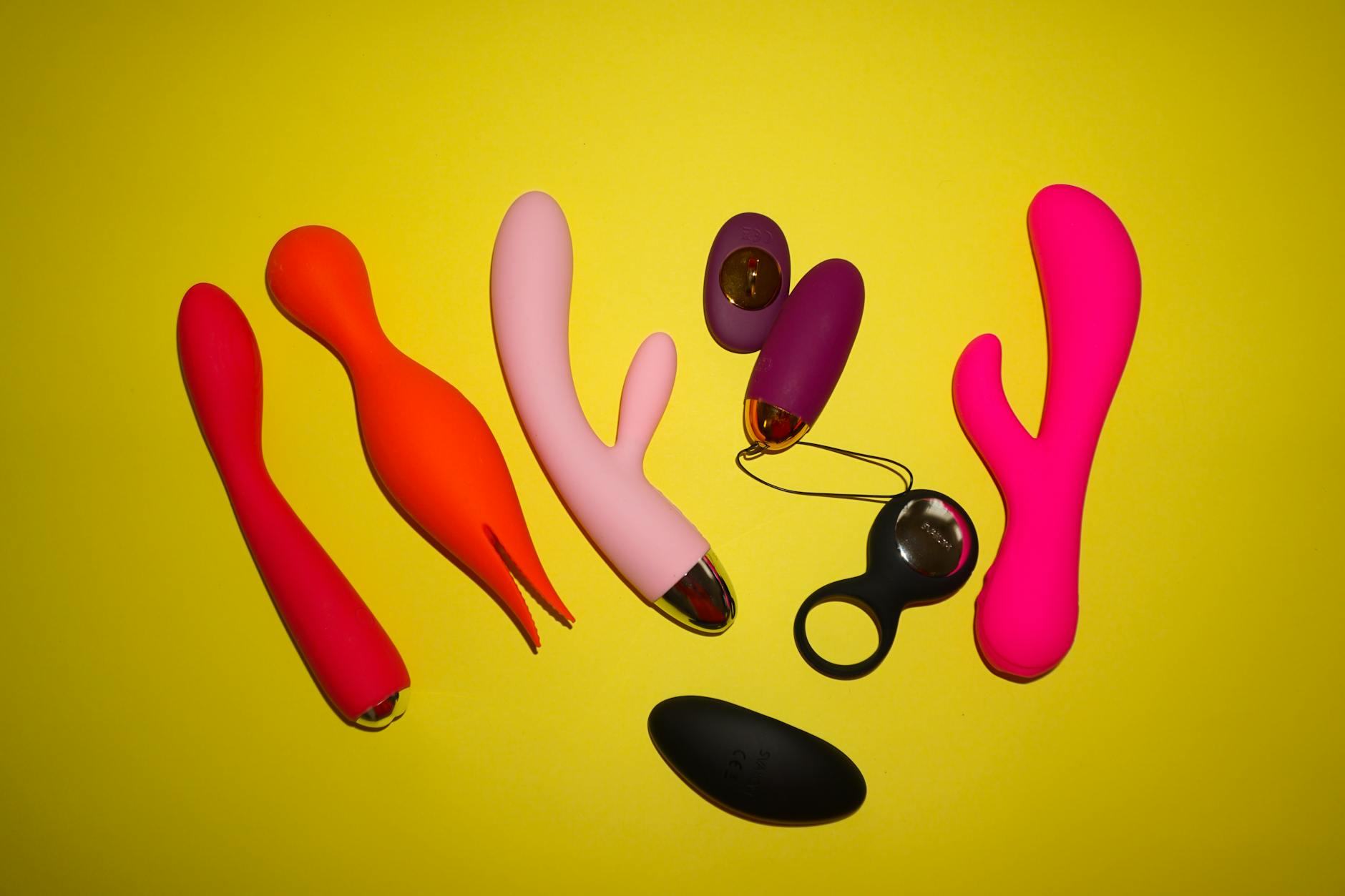
Honestly, shame is not just an emotion. It's a nervous system state. When you've internalized messages that your body, your desires, or your pleasure are wrong, your brain literally reorganizes how it processes sensation. Your nervous system learns to treat arousal as a threat.
This means that when you try to access pleasure again, your body doesn't respond the way it did before the shame arrived. It's not broken. It's protected. Your nervous system is doing exactly what it was taught to do.
The good news? That's also reversible. And lemon vibrators can be a surprisingly powerful tool for retraining your body to feel safe experiencing pleasure again.
When shame is present, your parasympathetic nervous system (the one that allows arousal and relaxation) gets overridden by your sympathetic system (fight, flight, freeze). Your blood vessels constrict. Lubrication decreases. Your pelvic floor tightens. Even if your brain wants pleasure, your body is in a locked-down state.
Over time, this becomes your baseline. Arousal feels foreign or impossible. Some people describe it as numbness. Others describe it as a wall between themselves and sensation.
What makes this particularly tricky is that shame often comes with a mental component too. You might feel guilt about wanting pleasure at all, which creates a kind of internal sabotage. Your mind is saying "go" while your nervous system is saying "stop." Both are true. Both need to shift.
Three things make clitoral vibrators, especially models like the Lem, particularly useful for this kind of nervous system healing.
First: gentleness retrains the nervous system. The suction and pulsing sensation of a lemon vibrator is different from traditional vibration. It's more like a massage than a buzz. This matters because your nervous system learns through sensation. Gentle, consistent stimulation teaches it that pleasure is safe. It's not forceful. It doesn't demand anything from your body.
Second: external stimulation bypasses some cognitive barriers. When shame lives in your mind, internal stimulation can feel loaded with meaning and judgment. External clitoral stimulation with a toy like the Lem gives your body permission to respond without the mental narrative that often sabotages solo play. It's not about you doing something to yourself. It's about allowing something gentle to happen to you.
Third: the nervous system responds to novelty in predictable ways. If your brain has been trained by shame to associate pleasure with danger, introducing a new sensation that's clearly separate from past associations can help. You're essentially saying to your nervous system: this is different, this is safe, this is mine.
When you're recovering from sexual shame, the journey usually follows a pattern. Understanding where you are matters because it changes what will help.
Stage 1: Disconnection. You can't feel much of anything. Your body feels numb or distant. A lemon vibrator in this stage serves one job: gentle, consistent sensation that reminds your nervous system what pleasure feels like without demanding a response.
Stage 2: Awareness with resistance. Now you can feel something, but it comes with anxiety or guilt. Your body starts to respond, then your mind pulls it back. The tool here is patience and very low pressure. Pattern one on the Lem. Short sessions. Five minutes is enough.
Stage 3: Sensation with self-judgment. Pleasure is becoming possible, but you're still struggling with permission. You might feel the urge to orgasm and then block it, or feel ashamed while it's happening. This stage benefits from a ritual. Light up a candle. Tell yourself explicitly: this is allowed. Then use the vibrator.
Stage 4: Integration. Pleasure starts to feel like a normal part of your body, not evidence of something broken or bad. You're not thinking about shame while you're experiencing sensation. This is when solo play becomes a genuine form of self-care instead of a test.
Not everyone moves through these stages linearly. You might cycle back. That's completely normal. The nervous system heals at its own pace.
Clitoral vibrators work through suction and pulsation, which creates a pressure wave rather than direct vibration. Why does this matter for shame recovery? Because pressure waves are soothing to the nervous system in a way that traditional vibrators aren't always.
Traditional vibrators can feel aggressive if your body is in a protected state. They demand a response. Suction vibrators like the Lem feel more like a warm hand, like presence. Your body can meet them without forcing.
Most of my clients who've experienced sexual shame report that lemon vibrators feel safer than other toys they've tried. Not weaker. Safer. There's a difference. Safety allows the nervous system to gradually unlock.
Start at the lowest setting. Your goal isn't to reach orgasm. Your goal is to feel comfortable. If you feel your pelvic floor tightening, stop. Breathe. Notice that you're safe. Then try again.
Here's what I need to say clearly: you cannot think your way out of shame with logic alone. Your nervous system doesn't respond to arguments. It responds to safety.
Using a lemon vibrator while silently criticizing yourself for wanting pleasure defeats the purpose. So before you start, practice one sentence out loud: "My pleasure matters. I deserve to feel good." It might feel ridiculous. Say it anyway.
Your nervous system learns through repetition. Every time you use the vibrator and allow yourself to feel without judgment, you're creating a new neural pathway. Not because the vibrator is magic. Because you're practicing a different relationship with your own body.
Some clients tell me they set a timer for 10 minutes and commit to using the tool without a goal. Not trying to come. Not trying to feel anything specific. Just allowing sensation and noticing what happens. That's exactly right.
Lemon vibrators and clitoral vibrators in general are a powerful tool. They're not a substitute for actual healing if your shame is rooted in trauma, abuse, or deep religious conditioning.
If using a vibrator consistently triggers anxiety, flashbacks, or deep shame spirals, talk to a therapist who specializes in sex-positive care. Shame that's tied to trauma needs professional support alongside any solo exploration.
There's nothing wrong with admitting that. Your body knows what it needs. If that's professional help first, then tools later, that's the right order for you.
But for many people, gentle self-pleasure with the right tool becomes part of reclaiming their body from shame. It's not frivolous. It's recovery.
Guilt is often the last thing shame releases. You can feel guilty and use the vibrator anyway. Notice the guilt. Keep going. Your nervous system gradually learns that pleasure and guilt can coexist, and slowly the guilt loosens its grip. If the guilt is overwhelming, pause and return when you're ready. There's no timeline.
Yes. Religious shame is particularly stubborn because it's been reinforced repeatedly and wrapped up in morality. The same nervous system retraining applies, but it might take longer. Some people find it helps to reframe solo pleasure as self-knowledge, self-care, or reclaiming autonomy. What matters is that you're choosing this for yourself, not because someone else told you to.
This varies wildly. Some people feel a shift after three sessions. Others take months. The nervous system doesn't operate on a schedule. What matters is consistency without pressure. Using it once a week is better than forcing daily sessions you dread. Quality over frequency.
Generally, start alone. Your body needs to rebuild trust with pleasure without the complication of another person's expectations. Once you've reconnected with solo sensation, partnered use becomes an option. Some people stay with solo play indefinitely. Both are fine.
The suction sensation is gentler and more rhythmic than traditional vibration. It feels less aggressive to a nervous system in a protected state. That said, everyone's body is different. If another toy feels safer to you, use that. The right tool is the one that helps your body feel safe, period.
Orgasm is not the goal in shame recovery. Connection and sensation are. Some people regain orgasm quickly once they're out of a shame state. Others take longer. Some people's nervous systems shift and orgasm becomes easier or feels different. All of these are normal. If you're getting sensation without judgment, the tool is working even if nothing is "finishing."