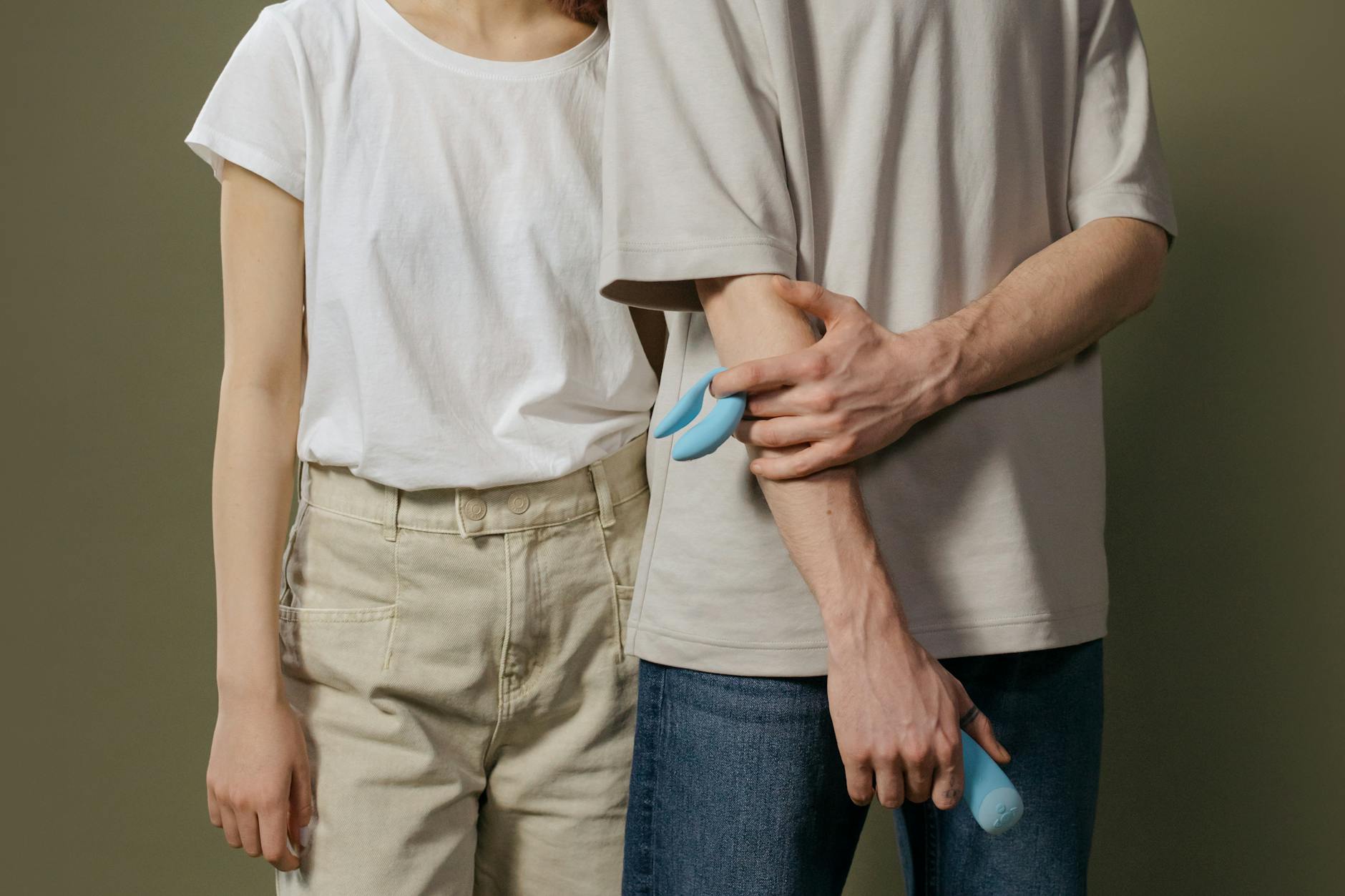
Why Lemon Vibrators Feel Different During Different Phases of Your Cycle
Your sensitivity to pleasure shifts across your cycle, and so does how a lemon clitoral vibrator feels. Here's what's actually happening, and how to work with it instead of against it.
Your lemon vibrator doesn't change. Your body does. Every two weeks, your hormones create a totally different playground, and if you're using the same settings and pressure at the same intensity no matter where you are in your cycle, you're basically trying to use one tool for two different jobs.
Here's what I see with clients: They get a clitoral vibrator like the Lem, fall in love with it, then notice that sometimes it feels absolutely perfect and sometimes it feels either underwhelming or borderline too much. They assume something's wrong with the toy or their body. It's neither. It's your cycle.
Estrogen and testosterone fluctuate throughout your cycle in a pretty predictable pattern. Both directly affect nerve sensitivity, blood flow to your genitals, and how quickly your body moves into arousal. This isn't subtle. It's measurable and consistent.
During the follicular phase (roughly days 1 to 14, though this varies), estrogen is rising. Your tissues become more plump and vascularized. Blood flow increases. Nerve endings become more responsive. This is the phase when a lot of people notice they orgasm more easily, sensation feels sharper, and the intensity settings on their lemon sexual toy that felt just right last week suddenly feel a bit soft.
During ovulation (typically around day 14), testosterone peaks alongside estrogen. This is often the phase when desire is highest and sensation is most acute. A lot of my clients report that this is when they reach for their clitoral vibrator first and feel the most immediate response.
Then comes the luteal phase (roughly days 15 to 28). Estrogen and testosterone both drop, progesterone rises. The tissues become slightly less engorged. Sensitivity can shift. Some people need more intensity to reach the same sensation; others find that they're more sensitive to overstimulation. This is also when anxiety and stress tend to spike, which can absolutely dull arousal independent of the hormones themselves.
Let's translate this into actual sensation. During your follicular phase and ovulation, a lemon clitoral vibrator on setting 3 or 4 might feel perfect. During your luteal phase, that same setting might feel like it's not quite hitting or, conversely, it might feel too intense because you're more emotionally activated.
This is why one-size-fits-all advice about vibrator settings doesn't work. Your baseline sensitivity isn't fixed. It moves.
The other factor nobody talks about: lubrication. Cervical mucus changes across your cycle, and while that's not the same as vaginal lubrication, hormonal fluctuations do affect overall moisture levels. When estrogen peaks, natural lubrication is usually higher. During the luteal phase, it often drops. Drier tissue feels different against a vibrator, even if the vibrator's intensity hasn't changed.
Here's what I recommend to clients who use lemon vibrators or any clitoral vibrator:
Know your phase. You don't need an app, but you should know roughly where you are in your cycle. There are free tracking methods or apps. The goal isn't perfection; it's having a rough map of when your body typically shifts.
Adjust your settings by phase. During your follicular phase and ovulation, start at a lower intensity than you think you need. You might surprise yourself with how responsive you are. During the luteal phase, you might need to bump up one or two settings to hit the same sensation, or you might prefer a different pattern entirely.
Water-based lubricant is your friend in the luteal phase. You're not broken if you need it; your hormones have simply shifted. Adding a bit of lubricant during the second half of your cycle often makes everything feel more comfortable and responsive.
Notice your emotional state too. During your luteal phase, if you're feeling stressed or anxious, arousal naturally dampens. This isn't a signal that your vibrator doesn't work anymore. It's a signal that you might need a longer warm-up period or more mental space to get into pleasure. Some clients find that using their lemon vibrator during the luteal phase works best in a really calm, low-stakes context rather than when they're already stressed.
Here's the thing that gets buried in all the "manage your sensitivity" advice: understanding your cycle around pleasure isn't about managing a problem. It's about accessing more range and depth in your pleasure.
During the follicular phase, you have access to sharper, more intense sensation. Use that. During the luteal phase, sensation often feels more diffuse and deeper. That's not less; it's different. Once you stop fighting the cycle and start working with it, a lot of people find they experience more varied, more satisfying pleasure overall.
The same clitoral vibrator used thoughtfully across your cycle becomes more valuable, not less. You're not looking for the toy to be everything all the time. You're looking at your body's actual capacity at each phase and adjusting.
Myth: You can't orgasm during your period. False. Orgasm can sometimes feel more intense during menstruation because of increased blood flow. Sensitivity might be slightly lower, so you might need a bit more intensity, but plenty of people have their easiest orgasms during this phase.
Myth: You should have the same desire all month. False. Desire fluctuates with hormones. It's not you being broken; it's biology. Understanding where desire naturally peaks (around ovulation) and where it often dips (mid-luteal phase) helps you stop blaming yourself.
Myth: If your vibrator doesn't feel good one week, it's broken. False. Usually, you've just moved into a different phase. Try adjusting your settings or your context before deciding the toy isn't working.
Myth: Everyone's cycle affects pleasure the same way. False. Some people notice these shifts intensely; some people barely notice them. If you don't notice big shifts, you might be in the less-sensitive group. Neither is right or wrong; it just means you might have less adjustment to do.
Your cycle changes blood flow, tissue plumpness, and nerve sensitivity. During the follicular phase and ovulation, when estrogen is higher, tissue is more engorged and sensation is sharper. During your luteal phase, tissues are less engorged and progesterone is higher, which can dull sensation. The vibrator's intensity hasn't changed; your nervous system's responsiveness has.
Absolutely. Your period doesn't make a vibrator unsafe or ineffective. Some people find orgasms feel more intense during menstruation because of the increased blood flow to your pelvic area. You might want to use a condom over the vibrator if you're concerned about hygiene, or just rinse it well after. Water-based lubricant can help if flow makes things feel drier.
Not everyone notices a shift. Hormonal sensitivity to pleasure varies hugely between people. Some folks' arousal and sensation are largely stable across their cycle; others feel like they're using a different body every two weeks. Both are normal. If you're not noticing changes, you don't need to force the adjustment.
No. This is when a lot of people actually lean into their lemon sexual toy because the deeper, more diffuse sensation can feel really satisfying. You might need to adjust your settings or your warm-up time, but stopping entirely means losing out on one of the most interesting phases of pleasure. Try adjusting your approach instead.
Yes, often significantly. If you're on a hormonal contraceptive, you're not cycling in the same way, so you might not notice phase-based sensitivity shifts. Some people on hormonal birth control have lower baseline arousal or sensation; others don't notice much difference. If your pleasure has shifted since going on or off birth control, that's likely why.
Yes, roughly. Most people report their most intense orgasms around ovulation (when testosterone peaks) or sometimes during their period (when blood flow is highest). The follicular phase tends to be when orgasm is most accessible; the luteal phase tends to be when sensation feels deeper but requires more warm-up. Tracking your own patterns over a few months will show you your specific rhythm.
Your lemon vibrator is consistent. Your body isn't, and that's the whole point. Once you understand how your cycle shifts sensation, you're not fighting your body anymore. You're working with it. The same toy becomes more useful, not less, because you're using it smarter. Your pleasure isn't supposed to be the same every day. It's supposed to be responsive, layered, and different. Learning to adjust is how you access all of it.