The awkwardness isn't a sign something's wrong. It's actually a sign you're about to do something vulnerable together, which is exactly where real intimacy lives.
I've worked with hundreds of couples navigating this exact threshold. The script is almost always the same: one partner brings up the idea, the other partner freezes a little, and then both of you kind of... don't talk about it again for three months. When it does come up again, it comes wrapped in jokes or late-night wine or whispered apologies. The awkwardness doesn't disappear. It just gets shelved.
Most couples develop pretty good rhythms around sex. You know what your partner likes. You know what you like. You've figured out timing, rhythm, what works on a Tuesday versus a Saturday. It's choreography, and choreography feels safe.
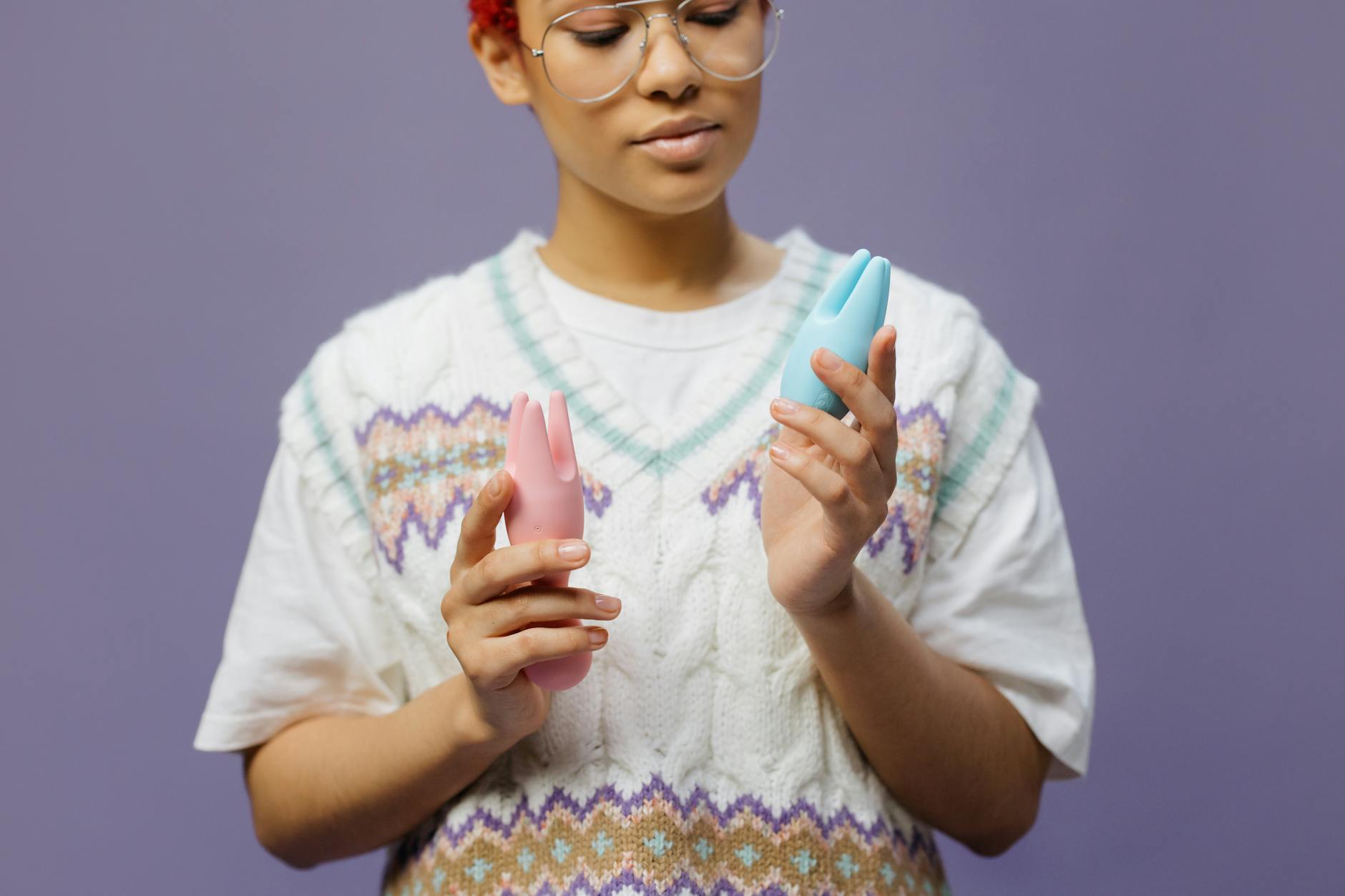
A vibrator, especially a clitoral vibrator like a lemon, breaks that choreography. It introduces a third element. And even though logically you both might know that vibrators are basically just tools, emotionally they can trigger something else: the worry that the vibrator means your partner isn't enough, or that you're not satisfied, or that you're asking for something they can't provide.
Neither of those things is true. But they're the stories that show up when awkwardness is actually anxiety in disguise.
The other layer: many of us grew up with messaging that toys meant you were unfulfilled or desperate or somehow less partnered. That shame doesn't vanish when you become an adult in a healthy relationship. It just gets quieter and more stubborn.
Don't wait until the lemon vibrator is sitting on your nightstand. Don't mention it casually mid-sex. Don't leave a link open on your laptop and hope they see it.
Have a real conversation. Outside the bedroom. When you're both clothed and neither of you is aroused. I know that sounds clinical. It's actually the opposite.
Here's the structure that works: curiosity first, desire second, logistics third.
Curiosity: "I've been thinking about trying a vibrator together. Not because anything's wrong, but because I'm curious about what it might feel like. Have you ever thought about that?" This opens the door without demanding anything.
Desire: "I want to explore this with you because I trust you and I want us to keep discovering things together." This is the reassurance layer. You're not running toward the toy or away from your partner. You're inviting them into something.
Logistics: "What would feel comfortable for you? Do you want to pick it out together, or would you rather I choose something?" This gives them agency and removes the sense that this is being done to them.
If they say no or "not yet," that's information. It's not rejection of you. It's a boundary, and boundaries are where trust actually gets built.
Here's what I hear from partners who feel hesitant: "What if I can't make that happen for her? What if the vibrator makes my touch feel pointless?"
That's the story running underneath the awkwardness. And it needs answering directly.
A clitoral vibrator doesn't replace you. It does something your body can't do, which is provide consistent high-frequency stimulation to a very specific nerve cluster. Your hands, your mouth, your body being present, your attention, your desire for your partner.those are irreplaceable. They're the thing the toy can't do.
In fact, most people who use vibrators with partners report that the vibrator works best when their partner is involved. Maybe they're the one holding it. Maybe they're providing other kinds of touch simultaneously. Maybe they're just present and engaged. The vibrator is the accelerant. Your partner is still the primary experience.
Assuming you've had the conversation and agreed to try a clitoral vibrator like the lemon: a few practical things that reduce the awkwardness drastically.
Introduce it during foreplay, not as the main event. Use it the same way you'd use your mouth or hands. It's one tool in your toolkit, not the replacement for everything else you do together. This matters psychologically more than practically.
Let them explore it first without it being "on." Touching it, feeling the texture, understanding what it is removes some of the mystery and makes it feel less alien when it's actually in use.
Communicate in the moment, but keep it light. "Does this feel good?" is better than "Is this better than when I do it?" One invites feedback. The other invites comparison.
Use lubricant. This isn't about friction. It's about smoothness and ease and removing anything that feels jarring or awkward. Lubrication is the physical equivalent of emotional ease.
Don't expect fireworks the first time. Most couples find the first experience with a new toy is about half pleasure and half logistics and novelty. That's completely normal. The second or third time is usually when you both relax enough to actually enjoy it.
Honestly: a lot of couples tell me that working through this particular awkwardness actually deepened their overall communication about sex and pleasure. Because you had to say the unsayable. You had to name the worry. And then the worry turned out to be manageable.
Your partner probably wants you to feel good. They're probably already thinking about your pleasure even if they're not always sure how to navigate it. A vibrator doesn't change that. It just gives them another way to participate in your pleasure.
The lemon vibrator sits on the shelf right next to vulnerability and trust. And those are the things that make long-term relationships actually work.
### Will using a vibrator make my partner feel inadequate?
Not if you're clear that the vibrator is about sensation, not comparison. Many partners actually feel more desire and engagement when they see their partner experiencing intense pleasure. What can feel inadequate is if you introduce the toy without conversation or context. That's where the insecurity lives. The toy itself is neutral.
### What if my partner wants to use it on me but I feel self-conscious?
Self-consciousness during sex is incredibly common, especially when introducing something new. Here's the thing: your partner is not evaluating you. They're focused on the sensation they're creating and the pleasure they're witnessing. If the self-consciousness is really strong, you can ask to start with the lights dimmer, or during a time when you both feel more relaxed, or with more foreplay first to ease into arousal. Self-consciousness fades when you're aroused enough. Give yourself permission to get there.
### How do I bring this up if we've never talked about toys before?
Start outside the bedroom with curiosity instead of request. "I read something interesting about vibrators and I'm curious what you'd think about it" is lighter than "I want to use a vibrator with you." You're opening a conversation, not making a demand. See where they land. If they're interested, great. If they need time, that's also fine. The conversation is the win.
### Can we use a lemon vibrator if my partner has performance anxiety?
Actually, vibrators can help with performance anxiety because they remove some of the pressure from a partner to perform a specific action. Instead of focusing on technique, both of you can focus on sensation. That said, the vibrator won't fix underlying anxiety about sex or intimacy. If performance anxiety is a bigger pattern, that might be worth exploring with a therapist. A vibrator is a tool for pleasure, not a fix for relationship patterns.
### What if I want to use it and they're still uncomfortable?
That's their boundary, and you get to decide what you do with it. You can use it alone (which is completely valid). You can give them time and revisit later. You can also have a deeper conversation about what the discomfort is actually about, which sometimes reveals something worth understanding together. Not every boundary is permanent. Some just need space and information before they shift.