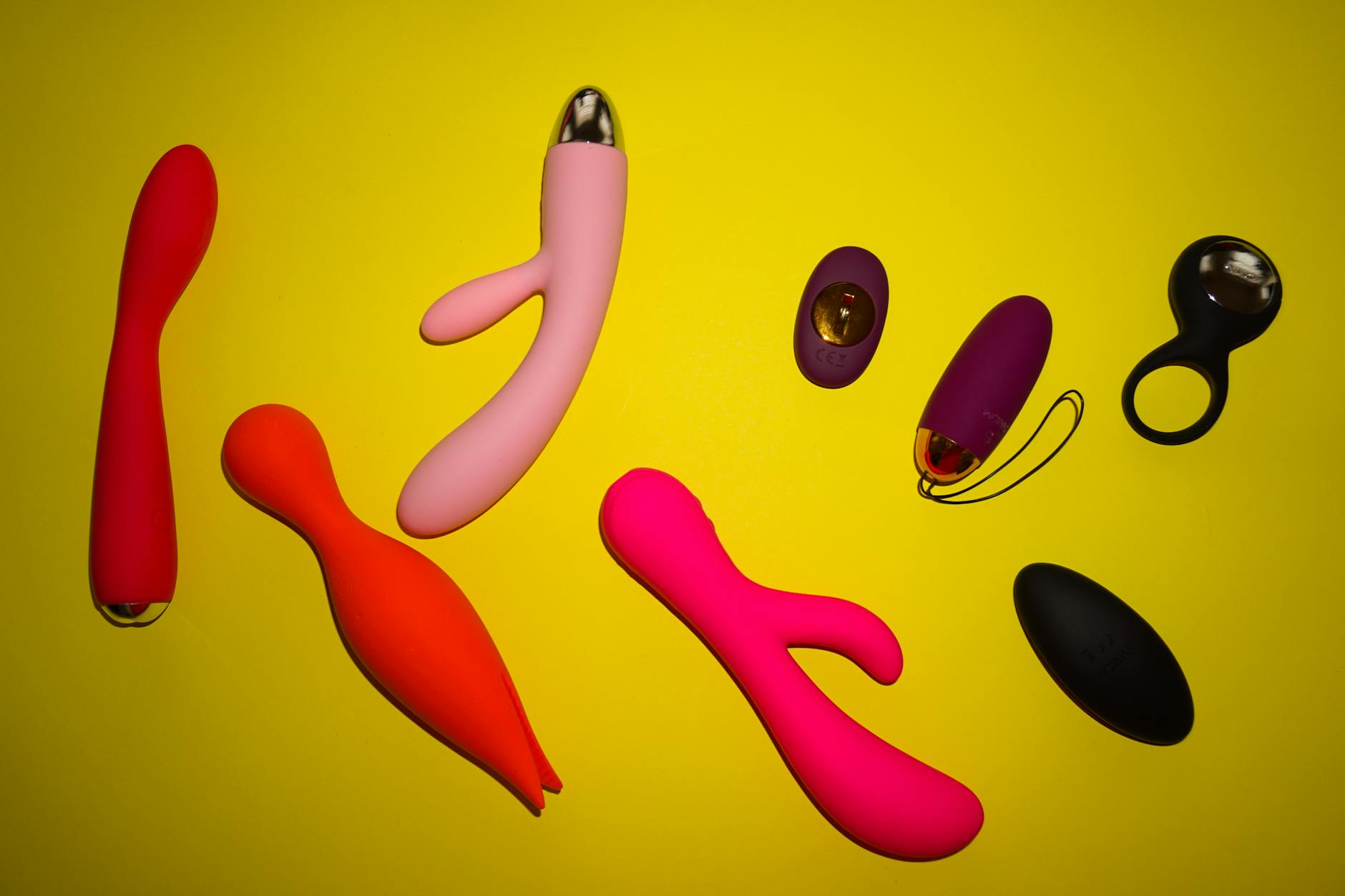
You've been thinking about it for weeks. A lemon vibrator. You know why you want one. You know it might feel good. But every time you imagine telling your partner, your brain goes quiet.
Here's the thing: the awkwardness isn't about the toy. It's about what you think the toy means to them. And that gap between what you're actually trying to say and what you're terrified they'll hear is exactly where most couples get stuck.
I've spent twenty years watching couples navigate this moment, and I can tell you it's almost never as bad as the version you're rehearsing in your shower at 6 a.m. What changes the conversation is knowing what you're actually trying to solve for.
Fear one: "They'll think I'm not satisfied with them." This one sits underneath almost everything. You worry that introducing a toy looks like a rejection. That it's a vote of no-confidence in their touch or their effort or your relationship.
Here's the actual science: novelty and variety light up your brain differently than consistent stimulation does. A lemon vibrator doesn't replace your partner's touch. It adds something your partner's hand literally cannot do. You wouldn't use the same shampoo for your hair and your body because they serve different purposes, not because the shampoo is saying your body's not good enough.
Your partner's job isn't to be a toy. It's to be your partner. Those are different roles, and admitting that isn't an insult.
Fear two: "They'll think I'm kinky or weird or something's wrong with me." You're worried that proposing a toy outs you as someone with unusual desires. That it changes how they see you.
The truth is quieter: most people want to feel wanted. If your partner cares about you, what matters isn't whether you want a toy. What matters is that you trusted them enough to ask. That vulnerability is what deepens relationships, not the toy itself.
Fear three: "They'll say no and then it's awkward forever." This is the one that keeps people silent the longest. You'd rather live with the fantasy than risk the rejection.
But here's what I've learned: a genuine no deserves respect, yes. But a knee-jerk no often comes from the same place your fear does. They think the toy means something it doesn't. They think you're bored. They think it's a criticism. None of that requires you to stay silent forever.
Instead of "I want to use a toy," try this frame: "I want to explore something together that might feel amazing for both of us."
Notice the difference. The first sentence is about the object. The second is about connection and curiosity. When you lead with the toy, your partner's mind goes to the toy. When you lead with shared pleasure and openness, they're already thinking about what matters.
The lemon vibrator isn't the conversation. The conversation is about wanting to try something that increases pleasure for both of you. The toy is just the tool.
Timing matters too. Don't bring this up when you're already in bed or during sex. That feels ambushing, like the toy is a solution to a problem you're implying exists right now. Instead, pick a time when you're both relaxed and clothed. A car ride. A lazy Sunday morning. A walk. The casualness of the setting tells your partner this is just a conversation, not a crisis.
Start with permission, not confession. Something like: "I've been thinking about trying something new in bed, and I wanted to talk about it with you first because your comfort matters."
That opening does three things. It signals you've been thinking (not impulsing). It frames the toy as something you want to try together (not something you need them to fix). And it explicitly says you care what they think. Your partner doesn't need to feel ambushed or assumed into compliance.
Then be specific about what you want and why. "I've read about lemon vibrators, and they're designed for clitoral stimulation that feels different from anything a hand or penis can do. I think it would feel really good, and I'd love to try it with you." Or: "I'm curious about what using a toy together might be like. I think it could be fun for us."
Notice you're not saying "I'm not satisfied." You're not saying "You can't make me come." You're saying what's true: this is a thing that exists, it sounds interesting, and you want to explore it.
Then stop talking. Let them think. Let them ask questions. Silence feels uncomfortable, but it's where your partner gets to process without pressure.
The most common response isn't "yes" or "no." It's "Why do you want that?" or "I'm enough, aren't I?" or "Are we bad in bed?"
This is their fear talking. Don't defend yourself. Agree with what's true underneath the question. "You are enough. That's exactly why I feel safe bringing this to you. I'm not looking for something you can't give me. I'm looking for something new for both of us."
If they're worried the toy means you're bored, say that plainly: "I'm not bored with you. I'm curious. Those are different things. I'm curious about a lot of things. That doesn't mean I'm unhappy."
The partner who feels rejected isn't being difficult. They're human. Give them time to sit with the idea. Offer to show them what you're talking about. A Hello Nancy lemon vibrator isn't shameful or weird. It's a tool designed specifically for pleasure. Demystifying it helps.
Respect lands. If your partner says no, the answer is no. But ask why. "I want to understand what's uncomfortable for you." Maybe it's religious. Maybe it's about body image. Maybe they had a bad experience. Maybe they genuinely don't want toys in their sex life, and that's their boundary to keep.
What you do with that answer is a relationship decision. Some couples live happily without toys. Some decide to revisit the conversation later when circumstances change. Some find a middle ground. "I respect this boundary. Can we talk about what would feel okay to you?" might open a conversation about different ways to explore together.
But if the answer is just fear disguised as no, the conversation doesn't have to end there. It can restart. Maybe in a month. Maybe with more information. Maybe with reassurance. The point is that silence keeps both of you locked in your own anxieties. Talking, even imperfectly, cracks that open.
You don't have to use the toy right away. You don't have to pull it out mid-sex the first time. Let curiosity unfold. You might show them your research. You might order a lemon vibrator together. You might use it alone first and tell them how it felt. You might laugh nervously the first time, and that's okay.
What matters is that you moved from the private fantasy into the actual world together. That you trusted your partner with something you wanted. And that you both get to figure out what feels good from there.
One more thing: if you've already had this conversation badly (you blurted it out, they reacted poorly, it's been tense since), it's not too late to restart. "I want to have that conversation again, because I didn't do a great job last time. Can we try?" Vulnerability and willingness to repair usually move people.
Conversation about toys isn't a sign that something's broken. It's a sign that you're willing to be honest about what you want. In my experience, that willingness to be honest is what actually strengthens a relationship.
This is the most common misinterpretation. You can head it off by being explicit: "I'm not asking you to do anything. I'm asking if you'd be comfortable with me exploring this. You don't have to use it. I could also use it by myself, or together we figure out what works." The toy isn't a replacement for their hands or body. It's an addition. Frame it that way.
Do not bring this up during sex or right after. Do it when you're both clothed and there's no performance pressure. A car ride, a casual morning, a walk. The casualness signals this isn't urgent or a complaint.
That's a conversation for a second round. "Actually, I think I'd like to try it myself first to see how it feels, and then we can figure out what feels good together." Consent goes both ways. Your boundaries matter too.
Eventually, yes. Not because you've done something wrong, but because secrets create distance. If you want your relationship to include toys, your partner needs to know. What you do with your own body in private is your call. What you do together needs to be something you both know about.
With tenderness. "I know we've never really talked about this, and I want to start. I've been thinking about trying something, and I value our relationship too much to keep it to myself." Long relationships can absolutely shift. The longer you've been together, the more permission you have to say "I want to explore something new."
If your relationship is struggling, a toy isn't the problem and it's not the solution. A lemon vibrator won't fix communication or emotional distance. If you're in real trouble, couples therapy comes first. Once you're both committed to rebuilding, then you can explore together from a more solid place.
Talking about desire is hard because it exposes you. It says: this matters to me, and I'm trusting you with it. That vulnerability is exactly what relationships are built on. The conversation feels impossible until you say it. Then it's just a conversation. And on the other side of that conversation is usually more intimacy, not less, because you've finally told your partner something true.
You deserve to ask for what you want. Your partner deserves to hear it directly. Everything else is just showing up honestly. That's always the hard part, and it's always worth it.