Let's be real. One of you wants sex twice a week. The other wants it twice a month. Neither of you is broken. Neither of you is wrong. But the gap between you feels like a wound that keeps reopening.
This is one of the most common couples issues I see in my practice, and it's also one of the least talked about. We hear about infidelity, communication breakdowns, and betrayal. We rarely hear about the quiet resentment that builds when one partner feels rejected and the other feels pressured.
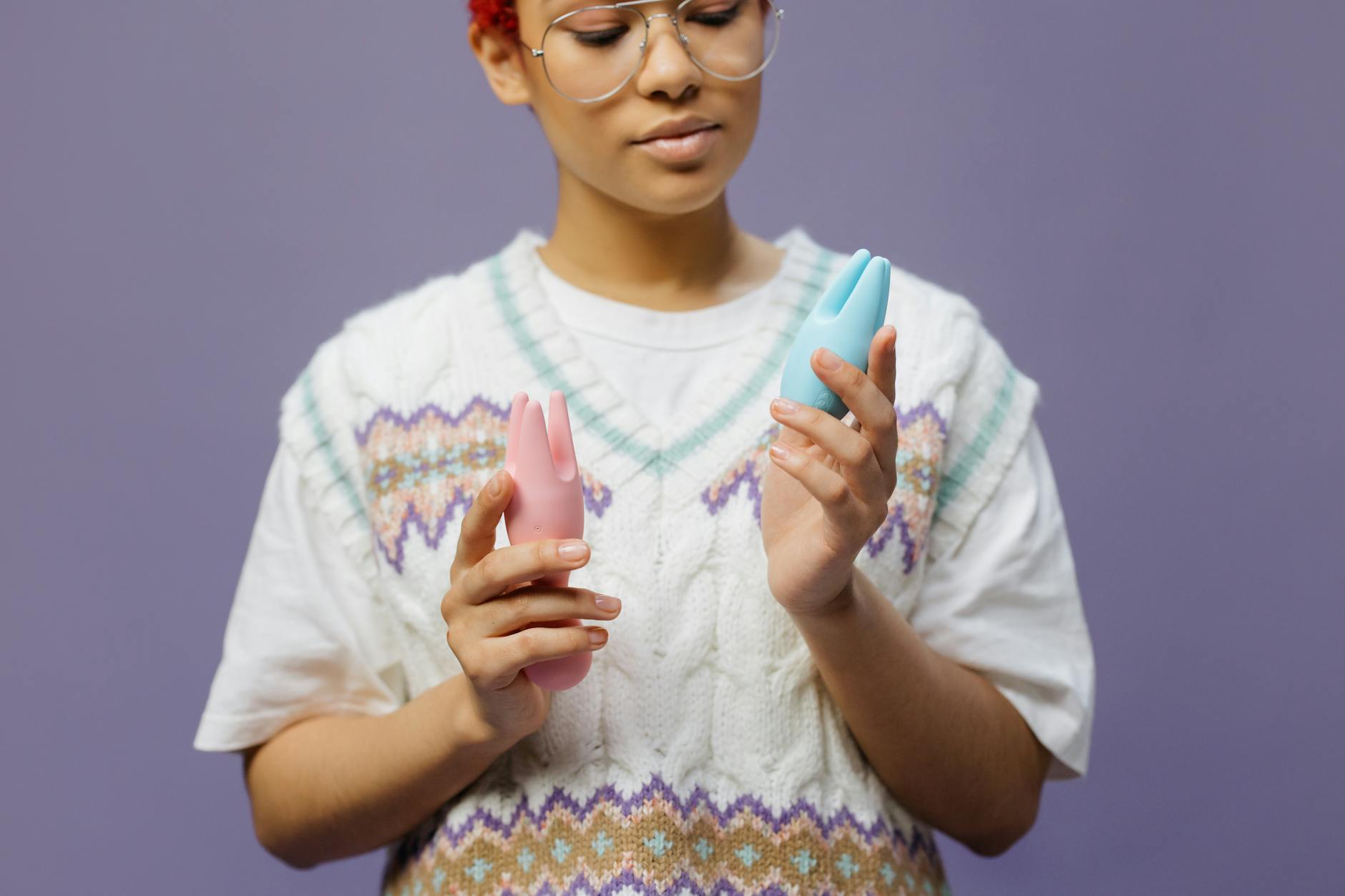
A lemon clitoral vibrator can help. Not by fixing the mismatch. But by reframing what intimacy looks like when desire levels don't align.
First, the obvious: hormones matter. Someone on hormonal birth control might have a lower baseline drive. Someone going through stress or burnout might have lost interest entirely. Medications like SSRIs can flatten desire. Medical conditions, sleep deprivation, relationship tension. All real factors.
But here's what couples often miss. The mismatch itself creates a psychological barrier that has nothing to do with hormones. The partner with lower desire feels pressure. The partner with higher desire feels rejected. Both become defensive. Sex becomes either a concession ("I'll do this because I have to") or a demand ("Why don't you want me"). Neither builds intimacy.
The lemon clitoral vibrator works in this space because it shifts sex from an either-or conversation (we have partnered sex or we don't) to a both-and possibility (we can have solo pleasure, partnered stimulation, or something in between).
The biggest mistake couples make is introducing a toy as a solution to the mismatch. It reads like an accusation. "You're not satisfying me, so I want this."
Instead, frame it as expansion, not substitution. Here's how I coach it:
Pick a moment when you're both calm and clothes-on. Not in bed, not in the middle of tension. Say something like: "I've been thinking about how we could reconnect around pleasure without it feeling like one of us is forcing the other. I read about these clitoral vibrators that some couples use together. I'm curious if that might feel good for us."
That's it. You've named the real problem (the pressure dynamic), offered a tool, and asked for interest. Not demand. Not apology. Just curiosity.
The lower-desire partner often says yes because you've removed the pressure. The higher-desire partner often says yes because you're finally acknowledging the gap. The vibrator becomes a bridge, not a weapon.
Lemon clitoral vibrators, and the Lem in particular, work differently than traditional vibrators for this dynamic. Here's why.
They don't require penetration or foreplay. If your partner has lower desire, they might be willing to receive clitoral stimulation even when penetrative sex feels like too much. A lemon sucker-style device means you can create pleasure quickly, without the whole production of undressing, warming up, and extended foreplay.
They're less overtly sexual. I know that sounds weird, but stick with me. A lemon vibrator looks like a beautiful toy. A traditional vibrator screams "sex toy." For partners with lower desire, that overt sexiness can create shame or performance pressure. A lemon clitoral vibrator feels gentler, less demanding.
They work brilliantly for both solo and partnered use. The higher-desire partner can use one alone without asking for sex. The lower-desire partner can receive clitoral stimulation while the higher-desire partner penetrates or simply stays present. Or you can take turns. The flexibility itself reduces pressure.
The intensity is customizable. Desire mismatches often come with different sensitivities. One partner might need strong, direct stimulation to come. The other might feel overwhelmed by vibration. A lemon vibrator's settings let you adjust in real time, which makes the experience feel like collaboration rather than compromise.
Let's say you've both agreed to try this. Here's what actually happens.
Start with one of you receiving. It doesn't have to be the one with lower desire. Sometimes it helps if the higher-desire partner goes first, which removes any sense of obligation from the other.
Take time. Get comfortable. Clothes off, or clothes on if that feels better. No rush. The difference between a quickie and actual intimacy is the pace. You're rebuilding connection here, not checking a box.
When you're ready, the partner with the lemon vibrator starts slow. Most people jump to intensity 3 or 4 right away. Start at 1. Let the body respond. The difference in sensation is often shocking. What felt numb at intensity 1 might feel incredible at intensity 2.
If you're partnered penetration plus clitoral stimulation, communicate constantly. "Is this angle working? Should I speed up? Does this feel good?" You're learning each other's bodies in a new way.
After, rest. Don't make it weird by jumping back to conversation or your phones. Just be there. This rebuilds the non-sexual physical intimacy that desire mismatches often kill.
Here's what I see clinically. When couples start using a lemon clitoral vibrator together, three things shift.
First, the pressure lifts. The higher-desire partner realizes they can get pleasure without their partner having to "want" sex in the traditional sense. This is weirdly freeing. They're not waiting for their partner to be in the mood. They're creating the mood together.
Second, the lower-desire partner often discovers that they actually enjoy sex more when it's on their terms. Without the pressure, without the foreplay they don't want, they can focus on their own pleasure. Which sometimes reveals that the issue wasn't low desire. It was low desire for the way you were having sex.
Third, the whole dynamic shifts from scarcity to abundance. Instead of "We don't have sex enough," it becomes "We have pleasure in a bunch of different ways." That reframe is everything.
"Won't this replace partnered sex?" Sometimes at first, yeah. But usually it invites more partnered sex because the pressure is gone. The lower-desire partner feels safer. The higher-desire partner feels heard. Sex stops being a fight.
"What if I can't come with a vibrator?" That's common and totally fine. A lemon vibrator isn't about coming. It's about sensation and connection. Some people come. Some don't. Both are success.
"My partner will think I'm saying they're not enough." Frame it clearly. "This isn't about you. This is about us having more options so we both feel good." And mean it. This tool works best when you're both genuinely curious, not when one person is secretly resentful.
"What if they say no?" Then you know where the real barrier is. It might not be desire difference. It might be shame, or feeling unheard, or something else entirely. A good couples therapist can help you both understand what's underneath.
Once you've used a lemon vibrator together a few times, a different conversation becomes possible. Not "Why don't you want me?" but "What does pleasure actually look like for you?"
For some couples, the mismatch was real but not the fault either person thought. One partner might discover they need more emotional connection before sex appeals to them. Another might realize they actually want more frequency, just not penetration. Another might find that their desire returns once the pressure vanishes.
The vibrator isn't the fix. The conversation is. But the vibrator gives you permission to have it without defensiveness.
There's no magic number. Start with once a week and see what feels natural. Some couples find they want more pleasure together once the pressure lifts. Some stay at once a week. The point is that it's a choice you're both making, not a concession either of you is resentfully granting.
Completely normal. Research suggests about 30% of couples experience desire discrepancies at some point. It's one of the top issues couples bring to therapy. You're not broken or unusual.
Absolutely. In fact, sometimes it's easier to introduce a lemon clitoral vibrator to someone new to toys because it feels less intimidating than a traditional vibrator. Start with the conversation, show them the actual device, let them hold it. Curiosity beats pressure every time.
Then the mismatch probably isn't just about sexual technique or physical response. It might be about relationship tension, emotional disconnection, stress, or something else. That's when couples therapy becomes valuable. A good therapist can help you both understand what's driving the gap.
Yes. Solo pleasure matters regardless of your relationship status. And sometimes when one partner sees the other enjoying a lemon vibrator alone, their curiosity changes. But never use it as a threat or a "I'll just do this myself" message. That defeats the whole purpose.
A vibrator helps when the desire mismatch is about logistics, physical response, or disconnection from touch. It can't fix infidelity, contempt, poor communication, or fundamental incompatibility. If you're fighting constantly, or if one partner feels fundamentally unheard, start with a couples therapist instead. The vibrator works best as a tool within an otherwise functional relationship that's just stuck on this one issue.
Desire mismatches don't disappear. But they stop being the defining feature of your sexuality when you have more than one way to connect. A lemon vibrator doesn't solve the problem. It opens the door to a conversation where both of you can actually be heard. And that conversation is where everything changes.
If you're ready to explore this with your partner, start small. Show them an article. Ask if they're curious. Let them decide. The best tools are the ones both people actually want to use.