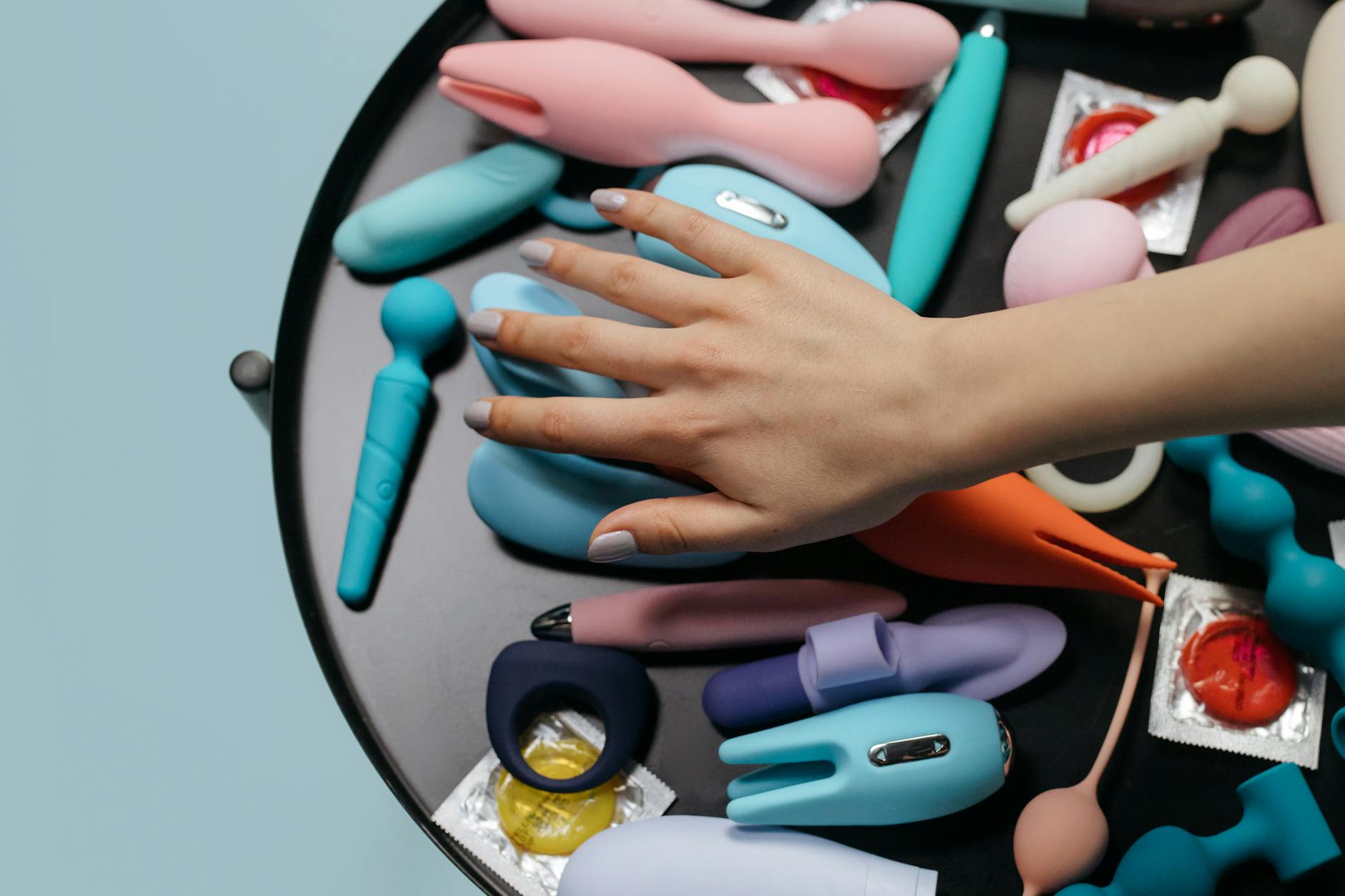
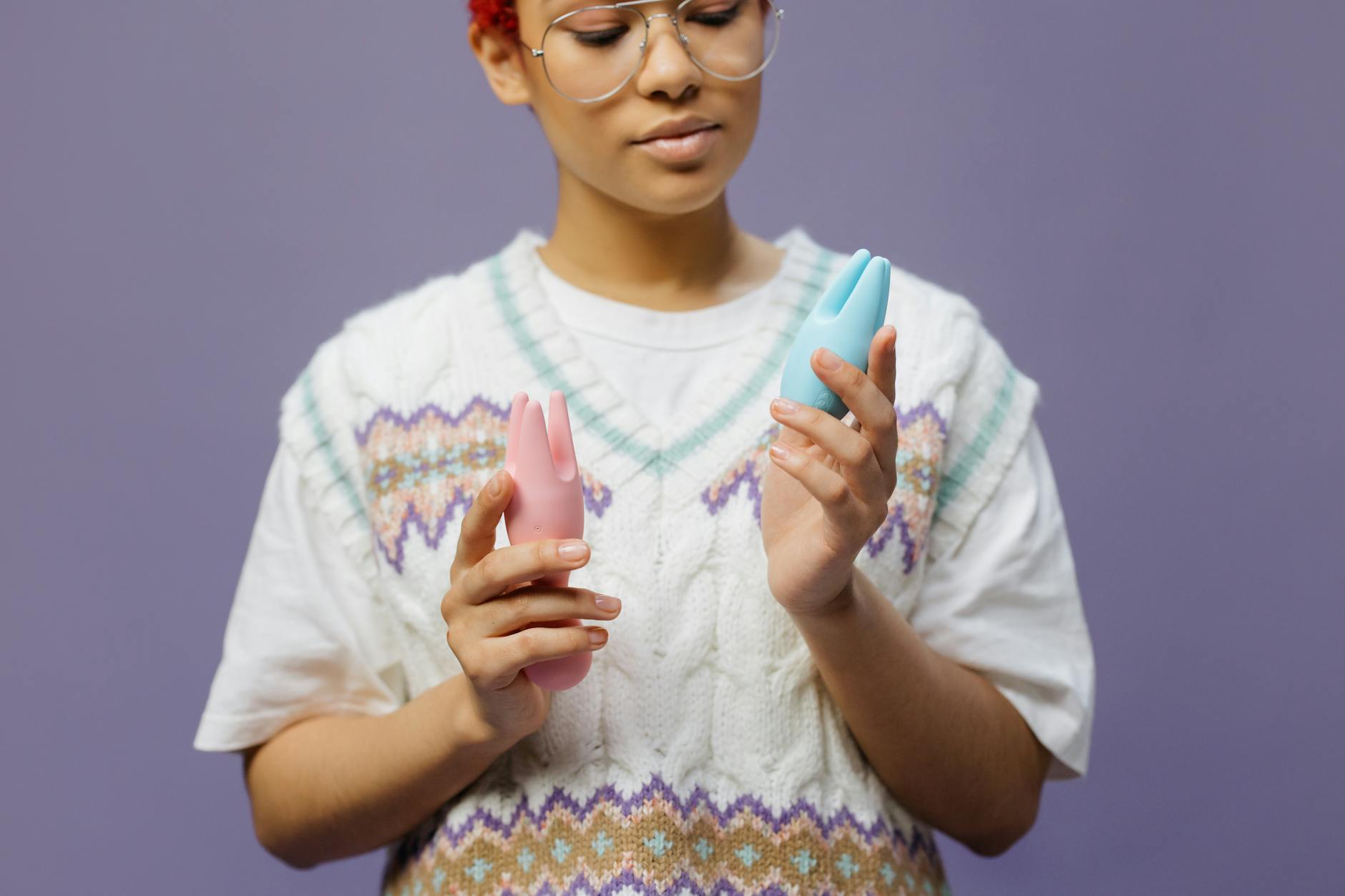
How Lemon Vibrators Help With Sensation When You're Using a Hormonal IUD
Your IUD is fantastic birth control. It's also quietly reshaping how your body responds to touch. Here's what changes, why it matters, and what actually works.
Hormonal IUDs are brilliant. They're over 99 percent effective, they last years, and they don't require you to think about contraception daily. But here's what your gynecologist might skip over: they change how pleasure works. Not dramatically. Not always noticeably. But measurably enough that you might spend six months thinking something's wrong with you before realizing your IUD is quietly altering your sensitivity.
Hormonal intrauterine devices release a synthetic progestin directly into your uterus and bloodstream. It's a much lower dose than the pill, but it's still suppressing ovulation and thickening cervical mucus. That matters for sensation.
Progestin dampens dopamine a little. Dopamine is partly what drives desire and arousal motivation. A flatter dopamine curve doesn't mean you're broken; it means the spark takes longer to catch. Many IUD users report that arousal feels muted compared to their pre-IUD baseline, especially in the first three to six months.
The second effect is more localized. Hormonal IUDs can reduce natural lubrication and slightly thin vaginal tissue because there's less circulating estrogen. This doesn't mean dryness necessarily, but it means the tissue isn't as plump or responsive. Clitoral sensitivity often feels duller when tissue is thinner.
Here's what doesn't change: your clitoral nerve density, your capacity for orgasm, or the neural pathways that create pleasure. The machinery is still intact. The volume is just turned down a notch.
Think of it like turning down the treble on an amplifier. The sound is still there, but you're not catching all the details. That's roughly what's happening with an IUD and sensation.
Three specific ways this shows up:
1. Arousal takes longer to build. If you used to get there in ten minutes, you might need fifteen or twenty now. This isn't low libido. It's a different timeline.
2. Clitoral stimulation feels less acute. Direct touch that used to be perfect might feel almost too intense or not intense enough. The sensitivity is flattened. Vibration can help because it's rapid, repetitive input to the nerves, and it cuts through that muted feeling more effectively than static pressure.
3. Lubrication cues are subtler. You might not notice the natural lubrication response as clearly, which can make it harder to gauge arousal progress. This is purely informational. Your body's still responding; you're just reading the signals differently.
Here's where clitoral vibrators like the Lem come in. The lemon clitoral vibrator uses suction and pulsation. Suction specifically targets the clitoral bulb (the part of the clitoris that extends internally), and the pulsing pattern mimics the nerve firing patterns of natural arousal, but amplified.
When tissue sensitivity is flattened by hormonal IUD suppression, you need more distinct, more organized input to engage the pleasure pathways. Suction does that. It's not aggressive. It's focused. It tells your nervous system: this is happening, pay attention.
The suction pattern also bypasses the need for natural lubrication. If your IUD has reduced lubrication production, direct friction can feel uncomfortable. Suction works on the tissue itself, not the surface. That's why many IUD users report that lemon vibrators feel effective when other toys feel wrong.
If you're using a lemon clitoral vibrator and you have a hormonal IUD, four adjustments make a difference:
Start at lower intensity. The IUD has already muted sensation. Your instinct might be to compensate by going to pattern 5 or 6 right away. Resist that. Start at pattern 1 or 2. As your nervous system recognizes the input, you can step up. This prevents overload and actually helps your body recalibrate to the sensation.
Give arousal time. Fifteen to twenty minutes of foreplay before introducing the vibrator. This isn't perfunctory. Your dopamine needs time to climb, your body needs time to warm up. The IUD has lengthened the arousal arc. That's not a bug; it's just the new parameter.
Use the suction, not direct vibration, as your workhorse. If your lem vibrator has suction and vibration options, lean on the suction pattern first. The pulsing suction mode is particularly effective for IUD users because it creates organized input without requiring friction.
Add water-based lubricant anyway. Even if your IUD has reduced lubrication, a small amount of external lubricant makes a difference. It protects thin tissue and helps the seal for suction work more effectively. This is not admitting defeat. It's using the right tool.
Your body doesn't adapt to an IUD overnight. If you're three months in and sensation feels muted, that's normal. Most people see improvement by month six or seven, not because the IUD changes, but because your nervous system acclimates to the new hormonal baseline.
Some people find their sensitivity rebounds partially after the first year. Others level out and stay a bit flatter than their pre-IUD baseline. Both are fine. Neither means the IUD is wrong for you. It just means you're working with different parameters.
During this adjustment phase, clitoral vibrators become particularly valuable. They're reliable. You don't have to wait for your body to cooperate in a specific way. You can use them consistently and track what patterns actually work for you now.
If sensation changes happen suddenly after months of normalcy on your IUD, get it checked. That can signal an infection or displacement. If sensation is completely absent and hasn't improved after six months, mention it to your gynecologist. You might want bloodwork to check your estrogen or discuss whether switching to a non-hormonal IUD makes sense for you.
Most of the time, though, muted sensation is exactly what's supposed to happen with a hormonal IUD. It's not a sign of dysfunction. It's just your body responding to a very potent contraceptive.
If you're partnered, the conversation gets important. Your partner might notice that arousal takes longer or that you're less responsive to their usual approach. That's not a reflection on them or your relationship. It's the IUD. Having that conversation separately from any performance anxiety makes everything easier.
Many couples find that introducing a lemon vibrator becomes a shared exploration rather than a solo workaround. It's not replacing your partner. It's adding input that your nervous system needs right now. That's different and worth naming.
Hormonal IUDs are one of the most reliable contraceptives available, and for many people, the slight dulling of sensation is a completely acceptable trade-off for not managing pills or other methods. That calculus is personal. But the good news is that if reduced sensation bothers you, you have clear options. Lemon vibrators work. Time helps. And knowing exactly what's happening removes a lot of the anxiety.
Your pleasure matters. So does your contraception. You don't have to choose between them. You just have to understand the conversation your body and your IUD are having.
No. Sensation dampening typically stabilizes within three to six months as your body adjusts to the hormonal baseline. Some people see partial recovery after a year. If you remove the IUD, sensation usually returns to baseline over a few weeks. The changes are temporary, not permanent.
Possibly. Many IUD users find that suction-based vibrators work better than direct vibration alone because reduced lubrication makes friction less comfortable. Lower intensity settings are often more effective initially. Starting at pattern 1 or 2 instead of jumping to higher levels helps your nervous system recalibrate.
Wait at least two weeks. Your uterus needs time to settle, and your body needs time to adjust to the hormonal shift. After two weeks, most gynecologists say it's safe to resume sexual activity, including vibrator use, as long as you're not experiencing cramping or bleeding.
Not directly. Hormonal IUDs release progestin systemically, so the effect on arousal and sensation is about the hormone level, not where the device sits. That said, if your IUD position is uncomfortable during penetration, that's a separate issue worth discussing with your doctor.
That's your choice, but honesty tends to help. If your partner understands the IUD is affecting sensation temporarily, they're less likely to interpret slower arousal or different response as rejection. Many couples find introducing a vibrator becomes a shared exploration rather than a solo workaround.
Most people notice improvement within two to four weeks and fuller recovery within two to three months. Hormonal shifts reverse relatively quickly once the device is gone. If sensation doesn't improve three months after removal, check in with your doctor.
Guthrie, K. A., et al. (2015). The effect of the levonorgestrel-releasing intrauterine system (LNG-IUS) on sexual function. The Journal of Sexual Medicine, 12(4), 948-956.
Walton, A. G., et al. (2014). Hormonal contraception and sexual function. Human Reproduction Update, 20(6), 1-16.
Köhler, T. S., & Gerber, G. S. (2016). The impact of endocrine disorders on female sexual function. Current Sexual Health Reports, 8(3), 44-50.
Chen, B. A., et al. (2019). Intrauterine device insertion-related perceptions, pain, and complications. Obstetrics & Gynecology, 133(3), 456-463.