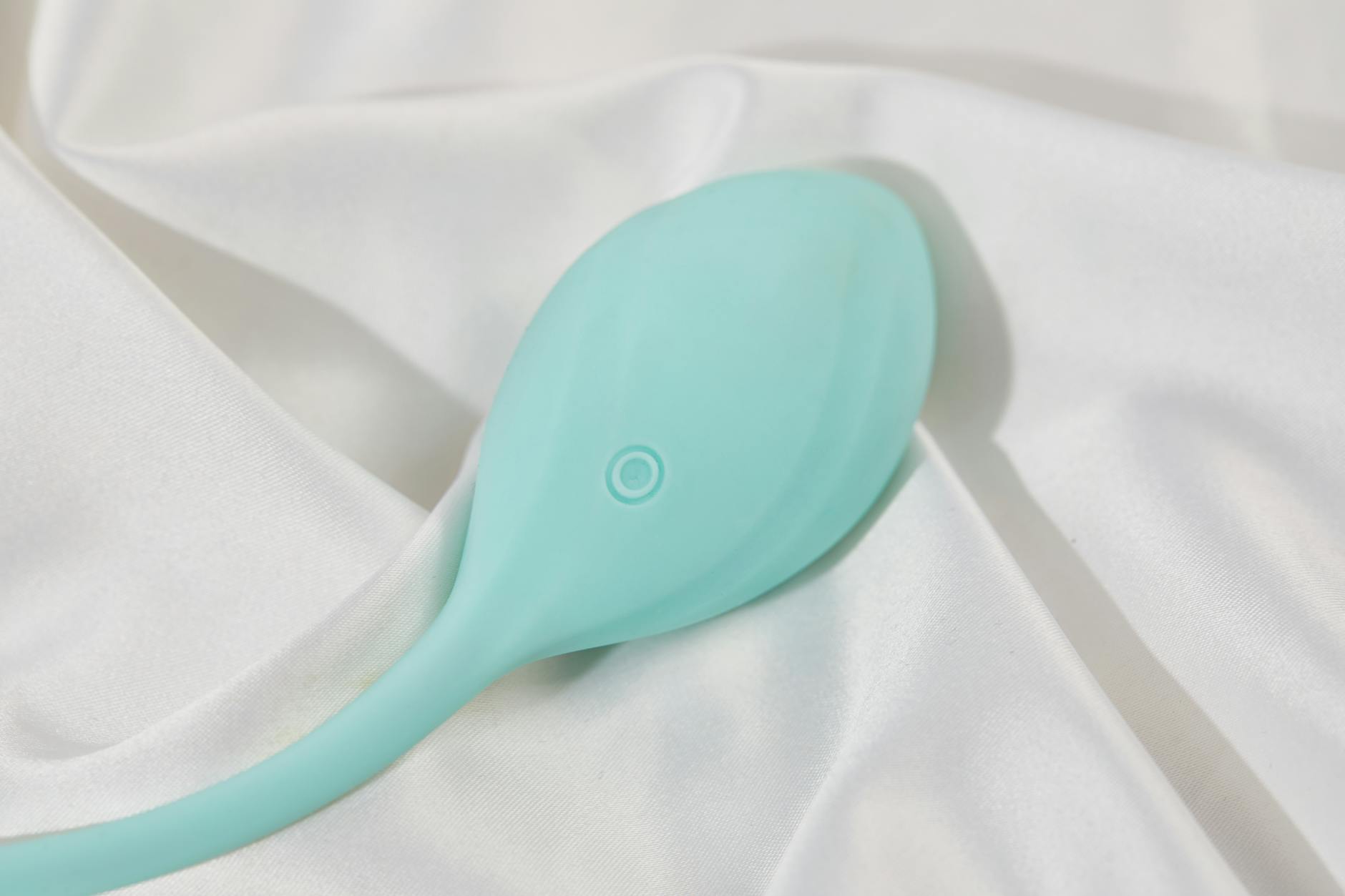
How Lemon Vibrators Help with Low Libido After Stress or Burnout
Stress doesn't just kill your mood. It hijacks your nervous system. Here's how a lemon clitoral vibrator can reset your body's pleasure response when burnout has flattened your desire.
Let's be real: when you're burned out, sex is the last thing your brain wants to think about. Your nervous system is in overdrive, your cortisol is through the roof, and your body has essentially locked desire behind a heavy door marked "deal with the crisis first."
The problem is that door doesn't unlock on its own just because the crisis passes. Burnout creates a loop where low desire feeds anxiety about low desire, which makes arousal even harder to access. You're not broken. Your nervous system just needs help finding its way back to pleasure.
This is where a lemon clitoral vibrator can actually reset things. Not through willpower or motivation. Through simple, direct physical input that teaches your body it's safe to feel good again.
When you're burned out, your body lives in a sympathetic nervous state. That's your fight-or-flight mode. High cortisol, high adrenaline, blood diverted away from your genitals and toward your muscles and brain. Arousal requires the opposite state: parasympathetic activation. Rest and digest. Safety.
Desire isn't just a feeling. It's a physiological shift. Your clitoris needs blood flow. Your vaginal tissue needs to expand and lubricate. Your brain needs to quiet down enough to register pleasure signals from your genitals. Burnout actively prevents all three.
Here's the twist: most advice for recovering desire focuses on the wrong level. People say "reduce stress" or "connect emotionally with your partner" or "schedule sex." All valid. But they're asking your brain to fix something that's broken at the body level. Your nervous system needs a direct message: pleasure is safe again.
That message arrives fastest through direct clitoral stimulation.
A lemon clitoral vibrator is designed to deliver consistent, targeted stimulation without requiring you to generate arousal first. You don't have to feel turned on to use one. You just have to be willing to sit still for five minutes.
This matters because burnout-related low libido often comes with a secondary problem: you've forgotten what arousal even feels like. The pathway between stimulation and pleasure has gone quiet. You touch yourself and feel almost nothing. Or you feel touch but it registers as annoying rather than pleasurable.
A lem vibrator bypasses the "am I in the mood" question entirely. The suction mechanism stimulates nerves in your clitoris that have nothing to do with emotional arousal. It's purely mechanical input. And repeated mechanical input actually rewires how your nervous system responds to pleasure.
Your brain doesn't produce desire through willpower. It learns desire through embodied experience. When you use a lemon sexual toy regularly, even for ten minutes at a time, you're literally rebuilding the neural pathways that connect clitoral stimulation to pleasure sensation. That's not mystical. That's neuroscience.
Here's what I recommend to clients working through burnout-related low libido:
Start small. Five to ten minutes, two or three times a week. Not because you need an orgasm. Because you're training your nervous system to recognize pleasure input without the pressure of outcome.
Use the lowest settings first. If you're using a lem vibrator, start at pattern 1 or 2. Your nervous system is already overstimulated. You don't need intensity. You need consistency. Let your body adjust to the sensation.
Make it ambient, not goal-focused. Put on music you like. Dim the lights. Make it feel like self-care, not sexual performance. The moment you switch to "I need to orgasm to prove this is working," you've re-engaged the performance anxiety loop that flattened your desire in the first place.
Notice sensation without judgment. You might feel tingling. Numbness. Mild pleasure. Irritation. Nothing. All of that is data. Your job isn't to feel turned on. It's to notice what your body is telling you. Judgment kills the process faster than anything.
Track patterns, not outcomes. After two weeks of consistent use, you might notice arousal starting to return during other activities. Or you might notice a slight shift in how stimulation feels. These are recovery signals. Orgasm will follow, but it's not the goal yet.
There's a reason I'm recommending a lemon clitoral vibrator over other options. The suction-based design is particularly useful for people recovering from burnout.
Vibration requires your nervous system to be already somewhat activated. If you're deeply flattened by stress, high-frequency vibration can feel overwhelming or numb. Suction works differently. It creates a pulling sensation that engages nerve clusters without that shock-and-awe intensity.
A lem vibrator also removes friction from the equation. When your tissue sensitivity is compromised by stress hormones, friction can feel raw or irritating. The suction action of a lemon sexual toy creates stimulation through pressure and release rather than rubbing. That's a fundamentally different input.
Second: simplicity. When you're burned out, decision fatigue is real. A lemon clitoral vibrator has a clear, intuitive interface. Five intensity levels. You don't need to problem-solve your way to pleasure. You just turn it on and let your body respond.
You won't rebuild arousal in a week. But you don't need to wait for your life stress to disappear either. Here's what the timeline typically looks like:
Weeks 1-2: You're mostly noticing sensation without much pleasure. That's normal. You're establishing the habit and sending your nervous system a consistent "pleasure is safe" signal.
Weeks 3-4: Arousal might start flickering during other activities. A partner's touch feels different. You have moments of spontaneous desire that weren't there before.
Weeks 5-8: Orgasms become more accessible. Not necessarily more intense, but less effortful. Your nervous system is starting to remember how to shift into parasympathetic mode.
Beyond 8 weeks: Desire becomes less dependent on the device. The lemon vibrator is still useful, but you're also accessing arousal through other pathways again. Partners notice the difference. You notice the difference.
This timeline assumes consistent use and some reduction in external stressors. If your stress levels remain maxed out, this process takes longer. That's not failure. It's just how your nervous system works.
A lemon sucker can't override ongoing burnout. If you're still operating at maximum stress, even regular use of a lem vibrator will have limited impact.
But here's what changes: using a lemon clitoral vibrator two or three times a week gives your nervous system concrete evidence that parasympathetic activation is possible. That shift in your physiology makes the rest of recovery easier. Sleep improves. Stress feels slightly more manageable. You have a bit more bandwidth for the actual healing work.
I recommend pairing lemon vibrator use with:
One activity that genuinely calms your nervous system. Not "should calm you." Actually calms you. For some people that's walking. For others, it's a bath. For others, it's sitting outside for ten minutes with coffee. Find your thing.
One conversation with someone you trust about what you're working through. Isolation deepens burnout. The goal isn't to vent forever. It's to let someone know you're struggling.
One boundary that removes a source of ongoing stress, even a small one. Can't change your job right now? Maybe you can stop checking email after 7 p.m. Can't reduce family obligations? Maybe you can delegate one recurring task. Small boundaries compound.
Using a lemon sexual toy is the physical reset. These three elements are the system reset.
If low libido persists beyond twelve weeks of consistent use and actual stress reduction, talk to a therapist who specializes in desire issues. Sometimes burnout masks deeper relationship dynamics or personal trauma that need clinical attention. A device can't fix that layer. But a trained professional can.
Similarly, if desire loss is accompanied by other symptoms of depression (sleep changes, appetite shifts, loss of pleasure in things you normally enjoy), a therapist or doctor is the right first step. Low desire might be a symptom rather than the root issue.
What a lemon clitoral vibrator is excellent at: helping a healthy nervous system remember how to feel pleasure after temporary stress. What it can't do: treat clinical depression or systemic relationship issues. Know the difference.
Honestly, the biggest barrier I see with people recovering from burnout isn't technique. It's permission.
You feel like you "should" be having more sex. Or you feel guilty that your partner is affected. Or you think if you weren't so burned out you wouldn't have this problem, so spending time on pleasure now feels indulgent.
Here's the thing: rebuilding desire after burnout is not self-indulgence. It's recovery. Using a lemon vibrator isn't procrastinating on your real problems. It's giving your nervous system the input it needs to heal. Your brain can't focus on reducing stress if your body is in constant threat mode. Pleasure is part of the solution, not a distraction from it.
Give yourself permission to spend ten minutes twice a week on pleasure. That's not time stolen from your responsibilities. That's time invested in becoming functional again.
Both. In the moment, it feels good. Over time, consistent use literally rewires your nervous system's capacity for arousal. Every time you experience pleasure, your brain creates a stronger pathway between stimulation and positive feeling. That's neuroplasticity. So yes, a lem vibrator can increase libido, but it takes weeks of regular use, not a single session. Think of it like exercise: one workout doesn't change your fitness, but six weeks of consistent movement absolutely does.
That's extremely common. Burnout can create a sensation of numbness. If you're not feeling pleasure, try lowering the intensity even further, make sure you're truly relaxed (and not trying hard), and extend the timeline. Four weeks instead of two. You're retraining your nervous system's ability to recognize pleasure signals. Sometimes that takes time. If after eight weeks of consistent use you still feel nothing, talk to a healthcare provider. Occasionally, sensation changes point to other issues worth investigating.
No. This is a common worry but it's not how desensitization works. Using a lemon sexual toy regularly doesn't make your clitoris "numb" to other kinds of touch. If anything, the opposite happens: as your nervous system becomes better at recognizing and responding to stimulation, you'll feel more during partnered sex too. The retraining goes both directions.
Honestly, frame it around nervous system recovery, not about them. "I'm working on rebuilding arousal after this burnout cycle. Using a device helps reset my body's response to pleasure." That's very different from "I need this because partnered sex isn't working." One is about you. The other sounds like criticism. Most partners are relieved to hear there's a concrete action plan and something that actually works. If your partner seems threatened, that's worth exploring, but usually the threat dissolves once they see it improving things.
Absolutely. If your tissue is compromised by stress hormones, lube makes the experience more comfortable. Water-based lube is best if you're using a silicone toy. It won't change how the device works, and it removes friction that might otherwise feel uncomfortable during the early stages of recovery.
Most people notice something by week 3 or 4: a shift in how they respond to touch, a moment of spontaneous arousal, or just slightly better sensitivity. Consistent, reliable arousal usually takes 6-8 weeks. If you're in the middle of active, unmanaged stress, add another 2-3 weeks. And remember: recovery isn't linear. Some weeks feel like progress. Others feel flat. That's normal.
Your nervous system didn't break overnight, and it won't heal overnight either. But it can heal. A lemon clitoral vibrator is one tool that makes that healing faster and more tangible. Start small. Be consistent. Give yourself permission. The desire is still there. Your body just needs help remembering how to access it.